
FORMA Y SONIDO
www.formaysonido.org
monteaudio25-transición
festival internacional de arte sonoro
festival radiofónico internacional monteaudio25transición — obras de la convocatoria 1 2 3 4 5 6 7 8 9 10 11 12 13
Esta página está sujeta a modificaciones y actualización.
Las obras están ordenadas según un desorden alfabético de los nombres de los autores.
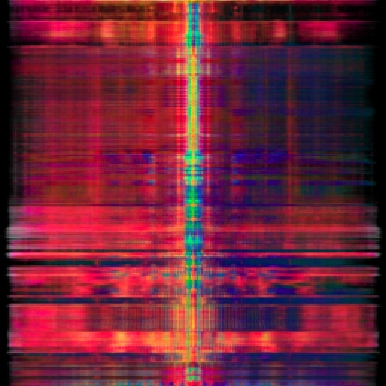
caalma (Carlos Macheratti) [Ar] sirenIA_001 - largo 20:06
Whhssh~ sss phff whooo sss tk phff. Phff~ whooo
el potencial de la herramienta est√° en su fallo
hhe ahhha ha hhhhheehhh hahaheehhahhha hhh h hh
seduce a la imaginación e incomoda lo cotidiano
alilmssaopood… rou usaeuñuaañfsr… ussuii ii sii
sumergirse modifica, extiende, contradice, daña
h ∞ ∞ ∞ ∞ ∞ ∞ ∞ ∞ ∞ ∞ ∞ ∞ ∞ ∞ ∞ ∞ ∞ ∞ ∞ ∞ ∞ ∞ ∞ ∞ ∞ ∞ ∞ ∞ ∞ ∞ ∞ ∞ ∞ ∞ ∞ ∞ ∞ ∞ ∞ ∞ ∞ ∞ ∞ ∞ ∞ ∞
múltiples fallas inducidas desvelan otro patrón
tA hwmbyiaht Ag cwndZjw g Zng pZtyiahtg dt pZJ́…
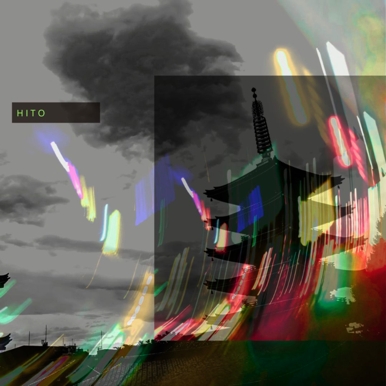
César Bernal [Cl] Hito - largo 24:32
Hito es una bitácora de mi primer viaje a Japón junto a Soyoka entre junio y julio del 2024.
Hace unos años comencé a componer bajo el concepto de música situada, crear con recursos que recolecto de un lugar; grabaciones de
campo, radios sintonizadas, tocar/escuchar objetos encontrados, escritos e
intervenciones instrumentales.
Esta forma de crear es para mí una forma de habitar un espacio y un tiempo determinado, desde la escucha, la
contemplación, encuentro una lectura integral del cómo me afectan la diversidad de planos de información de un espacio o ciudad, como esto nos afecta y transforma. Las grabaciones son
mi material concreto, desde ellas construye un discurso onírico, una obra textural que pone en dialogo posibles formas de vivir un entorno.
Esta obra tiene 7 momentos cada uno de ellos es una imagen de una ciudad;
(O)saka, (H)yōgo, (T)okio, (I)se y (K)ioto. Cada una tiene sutiles diferencias
en sus procesos creativos, grabaciones en templos sintoístas, budistas, metro trenes, trenes interregionales, conversaciones, un
encuentro familiar, un cementerio, rituales, bosques, ferias y las intensas
urbes en todo su esplendor.
Es una obra dedicada a la familia Kishi, Tsukazaki y especial a Cyan.
Chaerin Do [Ko-GB] Mother’s Womb - micro 1:28
«Every note that comes within the compass of music is always more than a note,
even though it is not possible to say precisely what that ‘more’ amounts to»
(Th. Adorno, Quasi Una Fantasia: Essays on Modern Music, 300).
I received a letter from my mother and father—words of care and well-wishing, sent across distance and time to me here in
London. After reading their letter, I didn’t just hold onto it as text. I recorded them. As my voice echoed the letters,
the sounds unfolded into something more: they became a gateway to the past, to
a time and place where I no longer have conscious memory but where the
sensation of sound was first imprinted on me—the womb of my mother.
Through this process of transformation, I ask: What sound would you wish to hold
onto forever? Not just any sound, but the one that echoes through the corridors
of your being, beyond the linearity of time. Perhaps it is a sound that has
accompanied you throughout your life, or one that has left an indelible mark on
your soul—an echo of the past, a fleeting moment, or even a sensation that you carry with
you without fully realizing it. What sound transcends its temporal existence
and becomes a part of you, something that lingers in the spaces between
breaths, in the silence between notes?
«Home»,within the womb, I learned the sensation of sound. It is there that I first
encountered rhythm, pattern, and the deep familiarity that would later be
reflected in every place I called home. Just as the voices of my parents,
received in text, stacked and layered over time, became an integral part of me,
so too did the sounds of the womb—forming the very foundation of my sense of self.
And so I ask: What sound do you feel closest to from your mother’s womb? The place where sound first began to shape your existence, before
language and memory could take root. The heartbeat, the breath, the internal
music that you knew without knowing, that made you who you are before you were
born.
In this work, the voice of my parents, recorded and transformed into sound,
becomes more than mere words on a page. It becomes a part of the soundscape of
my identity, just as every note in music carries with it something beyond its
immediate form. These sounds do not just occupy space—they create it, they fill it, they change it. They are, as Schafer says, «A soundscape consists of events heard not objects seen» (M. Schafer, Our Sonic Environment and The Tuning of the World: The Soundscape, 8).
VorticeX (Charlotte Adams) [Br] Bio-Rave (Aquatic) - largo 16:01
En Bio-Rave (Aquatic), la actividad eléctrica de una planta modula todo el campo sonoro.
Sus señales cambiantes ejecutan un sintetizador de Sound Particles, que luego es
reinterpretado por el modelo RAVE «Marine Mammals» (IRCAM / ACIDS Paris).
El resultado es un set electrónico de orientación club en el que el dataset escucha y reformula las texturas en rastros
sumergidos, casi animales.
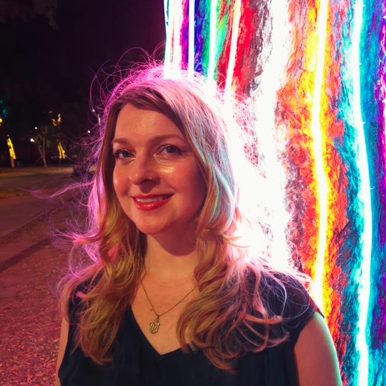
Colectivo Refluxus [It-Br-Is] Beabá da paz - largo 7:23
Este proyecto explora la relación entre sonido, lenguaje y paz a través de una metodología etnográfica interespecies. Usamos fonemas como «semillas sonoras»: sonidos monosilábicos sin significado fijo, capaces de evocar fuerzas de la naturaleza o lo
divino según cada cultura.
Mezclamos: Alfabetos hebreo, italiano, maya, guaraní y brasileño. Canción maya para niños Y Canción titulada «Araruna» del pueblo originario Guarani de Brasil (voz de Malu Hatoum). Instumentos:
Kalimba y esfera rotatória. Sonidos grabados en Italia (necrópolis etrusca), México (selva maya), Brasil (Chapada Diamantina y Garça) y Suiza (montaña de Nara).
432Hz (frecuencia de paz)
180Hz (frecuencia meditativa)
528Hz (frecuencia de cura)
Esta pieza sonora viaja por lenguas ancestrales y paisajes naturales, como
respuesta a la violencia del presente.
Nos preguntamos:
¿Cómo reconectamos con todos los seres vivos?
¿Cómo transformamos el lenguaje en una herramienta de paz sin negar el conflicto?
Colectivo Refluxus es un colectivo de artistas sonoras mujeres intergeneracional
y interterritorial que trabaja desde 2019 con composiciones, instalaciones y
performance. Idealiza y produce el Chicharra Festival Nómada de Escucha. Ebe Giovannini, Italia; Malu Hatoum, Brasil; Anat Moss, Israel.
2025
monteaudio25-transición
raquel g. ibañez
cursos EP
Festival radio
radio fest Tsonami
pre-eventos
Taller experimental
de arte sonoro

